In hygienic environments, cleanability isn’t something you add at the end. It must be built into every component from the start. Facilities like food processing plants, pharmaceutical manufacturing sites, and other controlled environments operate under strict sanitation standards, where even small design oversights can create risks. Every piece of infrastructure should actively support contamination control, not make it harder to achieve.
While a lot of focus is placed on choosing the right materials and finishes, the shape and geometry of surfaces are just as critical. The way a surface is designed can either prevent buildup or unintentionally create areas where debris, moisture, or bacteria can collect.
That’s why one of the core principles Rocket Rack emphasizes in its hygienic configurations is simple but powerful: avoid flat horizontal surfaces whenever possible. By incorporating sloped designs, systems naturally shed water and debris, making cleaning more effective and reducing the chance of contamination over time.
Why Surface Geometry Matters
Even the most hygienic material can become a liability if it’s shaped in a way that allows contaminants to collect and remain on the surface.
That’s where geometry comes in.
Flat horizontal surfaces are one of the most common—and most overlooked—design issues. By their nature, they act as collection points. In a dry environment, that might mean dust or fine particulates. In washdown or high-moisture environments, it often means standing water, chemical residue, or product runoff. Once liquid sits on a surface, it creates the perfect conditions for residue buildup and, over time, microbial growth.
Another common issue is where flat surfaces intersect with vertical ones. These transitions can create subtle edges or seams where liquid slows down and collects instead of draining away. Over time, these micro-accumulation points become harder to clean and can undermine even well-designed sanitation protocols.
This is why relying on cleaning alone isn’t enough. If a surface is designed in a way that encourages buildup, sanitation teams are constantly working against the design rather than with it.
By contrast, thoughtfully engineered surface geometry actively supports cleanability. Sloped surfaces introduce gravity into the equation, allowing water, foam, and debris to naturally run off instead of sitting in place. Even a slight angle can make a significant difference—turning a surface from a collection point into a self-draining one.
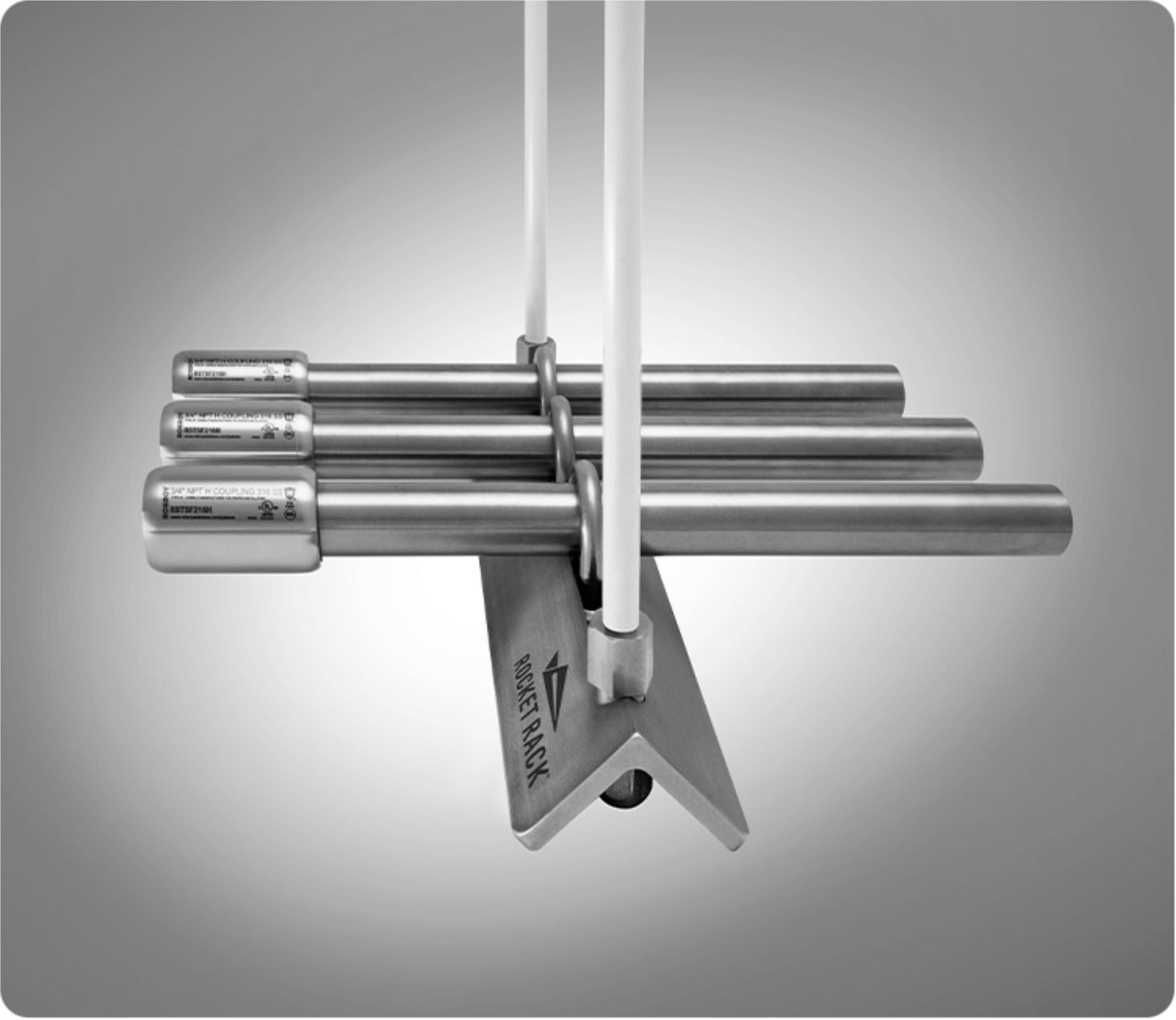
In Rocket Rack’s hygienic configurations, this principle is applied throughout the system. Flat horizontal planes are minimized, and components are designed with intentional slopes so that liquids don’t have a chance to accumulate. For instance, instead of a flat-top surface on a support member, a sloped or “tented” profile encourages immediate runoff during cleaning.
The impact of this approach shows up in day-to-day operations. Surfaces dry faster, reducing the window where bacteria can grow. Cleaning becomes more efficient because there are fewer problem areas to focus on. And perhaps most importantly, the consistency of sanitation improves—because the design itself reduces reliance on perfect cleaning execution every time.
Sloped Design in Practice
Good hygienic design isn’t just about avoiding flat surfaces—it’s about thinking through how the entire system behaves in a real-world environment.
Rocket Rack takes this approach by designing components that help water and debris move off the structure instead of sitting on it. In washdown settings especially, that movement matters. The less time moisture sticks around, the less opportunity there is for buildup or contamination.
The Tented Rack is a good example of how that thinking shows up in practice. Its angled shape helps guide water and debris away naturally, instead of letting it collect. It’s a simple idea, but it makes a noticeable difference when it comes to keeping things clean.
Reducing Harborage Points
Effective hygienic design goes beyond what you can easily see. Even small, hidden areas can become harborage points where bacteria and contaminants persist despite regular cleaning.
That’s why cleanability isn’t just about drainage—it’s also about eliminating the tiny spaces where buildup can hide. Threads, crevices, and recessed features can all create challenges if they aren’t carefully addressed in the design phase.
So how does Rocket Rack actually reduce these risks in practice?
One approach is minimizing exposed threads. In traditional systems, threaded rods and fasteners often leave grooves exposed, which can trap moisture, food particles, or chemical residue. These grooves are difficult to clean thoroughly, especially during routine washdowns. Rocket Rack’s hardware is designed to limit exposed threading wherever possible, reducing those hard-to-clean areas.
Another example is the elimination of deep slots and recessed pockets. Many strut-based systems rely on open channels or deep cavities that naturally collect debris. Over time, these become hidden contamination zones. Rocket Rack’s slot design is engineered to be more open and accessible, avoiding deep recesses so that surfaces can be more easily reached and cleaned.
The platform design also plays a role. Instead of creating overlapping surfaces or tight joints where material can get trapped, Rocket Rack components are designed with smoother transitions and fewer tight contact points. This reduces the number of “dead spaces” where buildup can occur.
Even hardware selection matters. Using custom-designed components instead of off-the-shelf fasteners allows for tighter control over geometry—reducing gaps, eliminating unnecessary seams, and creating more cleanable connections throughout the system.
The result of these combined design choices is a system with fewer places for contaminants to hide in the first place. Instead of relying solely on more aggressive cleaning processes, the design itself helps make sanitation more effective, consistent, and reliable over time.
The Takeaway
At its core, hygienic design is about reducing risk—and surface geometry plays a bigger role in that than many people realize.
A flat cable tray or support rail may seem harmless, but after repeated washdowns, water can pool along its length. That standing water can mix with process debris or cleaning chemicals, leaving behind films or deposits that are difficult to fully remove. Even with regular cleaning, these areas often require extra attention—or worse, get missed entirely.
By minimizing flat horizontal surfaces, harborage points and incorporating sloped features and limiting contamination points, infrastructure can actively prevent the accumulation of liquid, debris, and contaminants. This not only improves cleanability but also supports more reliable sanitation outcomes over time.
Rocket Rack builds these principles into its hygienic configurations, creating systems that align with the realities of regulated environments. The result is infrastructure that doesn’t just meet standards on paper, but helps facilities maintain them in day-to-day operation.